
































From the kitchen to the cloud: How a Viennese restaurant business became more digitally stable with GASTORO

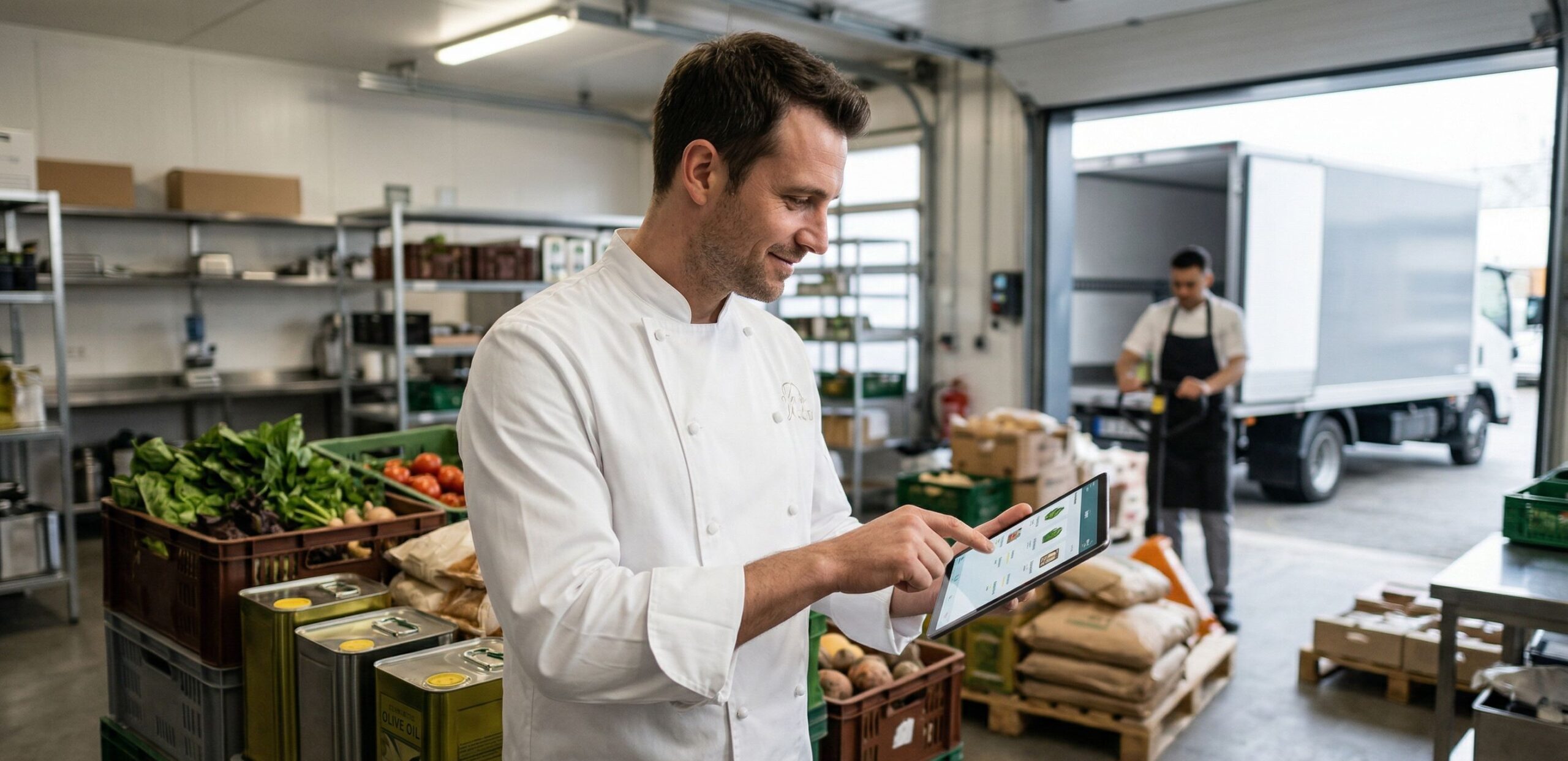
Introduction
Many companies are currently experiencing the same picture:
fewer staff, more tasks, rising prices, a volatile market – and the need to make better decisions in less and less time.
Traditional purchasing processes often reach their limits here:
Too many phone calls, unclear price developments, spontaneous availability problems
and paperwork that takes up time that nobody has.
This case study shows how a medium-sized Viennese restaurant business digitized its purchasing processes – and the effects this has had in just a few months.
No exaggerations, no success stories from the drawer, but a real, sober look at an industry in which restaurants and suppliers work under the same economic conditions and face the same problems.
Table of contents
- Initial situation: high outlay, little predictability
- Why digitalization is not a “nice-to-have” but a necessity
- What specific changes GASTORO has brought
- How structured demand stabilized prices
- What advantages the supplier had – not just the restaurateur
- Conclusion: The industry will only be fit for the future together
1. initial situation: high outlay, little predictability
The business we are looking at here is a typical example:
a Viennese restaurant with 10-15 employees,
upscale but not high-priced cuisine,
five main suppliers and many small specialty producers.
The biggest problems before the changeover:
- Strong price pressure due to rising food and energy costs
- Lack of availability of some product groups
- High communication effort due to phone calls and unclear orders
- Fluctuating prices that were difficult to understand
- Lack of transparency between kitchen management, purchasing and suppliers
- Loss of time because many things had to be clarified twice and three times
In short:
A system that worked in the past was no longer viable under modern conditions.
2. why digitalization is not a “nice-to-have” but a necessity
The crucial point was not modernization for modernization’s sake,
but simple insight:
“We have less and less time for the same tasks.”
The kitchen management wanted:
- Document orders cleanly
- Compare prices faster
- Making delivery reliability traceable
- Recognize seasonal fluctuations at an early stage
- Clearer decision-making basis for the use of goods
The suppliers in turn faced the same problems:
- Changing order rhythms
- Short-term quantity requests
- Unplanned order peaks
- Rising logistics costs
- Numerous queries due to unclear orders
Both sides recognized:
They are in the same boat.
If only one digitizes, there is no improvement.
If both digitize, structure is created.
3. what concrete changes GASTORO has brought
After the introduction of GASTORO, the process changed step by step:
✓ 1) All products & prices at a glance
For the first time, the company was able to compare real
instead of relying on memories or PDF catalogs.
✓ 2) Orders were clearly documented
Queries fell drastically.
Incorrect orders decreased significantly.
✓ 3) Delivery times were traceable
The company could see which supplier was reliable – and which was not.
✓ 4) The ordering of recurring goods has been automated
This significantly reduced the time required for routine orders.
✓ 5) Data replaces gut feeling
For the first time, the team was able to transparently track
where prices rose, fell or remained stable.
The biggest change was not technical, but organizational:
Purchasing became plannable, and plannability is the most important factor at a time when economic conditions fluctuate daily.
4. how structured demand stabilized prices
GASTORO shows when many businesses order similar products.
This is the decisive economic lever.
In the case of this company, it led to this:
- The supplier recognized realistic quantities,
instead of relying on estimates. - The restaurateur benefited from price stability,
because the supplier was able to calculate more reliably. - Seasonal fluctuations became more predictable,
because aggregated demand became visible.
The principle behind it is simple:
Plannable quantities create better prices – for both sides.
Not because someone wants to “shop communally”, but because that’s how the market works.
The result: a real, measurable advantage without additional effort.
5. what advantages the supplier had – not just the restaurateur
One interesting effect was that it wasn’t just the restaurateur who won – the supplier did too.
Advantages for the supplier:
- Clear volume development instead of spontaneous fluctuations
- Lower acquisition costs because restaurateurs were actively searching
- Less miscommunication, as orders were clearly stored
- More stable delivery cycles because the demand of several companies has been aggregated
- Better production & warehousing because data was available
The supplier said in conversation:
“For the first time, we have seen where demand is heading.
That takes a lot of pressure off the calculation.”
This also shows that
restaurants and suppliers are not on different sides,
they benefit in parallel from a structured system.
6 Conclusion: The industry will only be fit for the future together
The insight from this case study is clear:
- Digitization reduces costs
- Structure reduces errors
- Transparency creates predictability
- and bundled demand stabilizes prices
These are benefits that no single company can generate on its own.
They only arise when the catering trade and suppliers use the same tools
and see the same data.
It is often said that the industry must “stick together”.
In reality, it’s about something else:
For economic common sense.
If everyone has the same challenges, it is logical that common structures help everyone.
GASTORO provides this structural framework – sober, functional and economically sensible.
👉 Discover GASTORO: gastoro.com
Buy more efficiently. Deliver more stable. Work together more economically.