


































Think regionally, act digitally – why regional procurement will only work together in 2026

Introduction
Regionality is no longer a trend, but a business necessity.
Catering businesses want reliable quality, short distances and products whose origin is traceable. Suppliers, in turn, need stable customers, predictable quantities and fair framework conditions in order to be able to produce sustainably.
But the reality is:
The economic situation has become more challenging for both sides.
Prices are more volatile, there is a shortage of staff, and energy and transport costs are rising.
Catering and suppliers are now in the same boat –
and face the same economic risks.
The key for 2026 is therefore:
Rethinking regionality – digitally, structured and together.
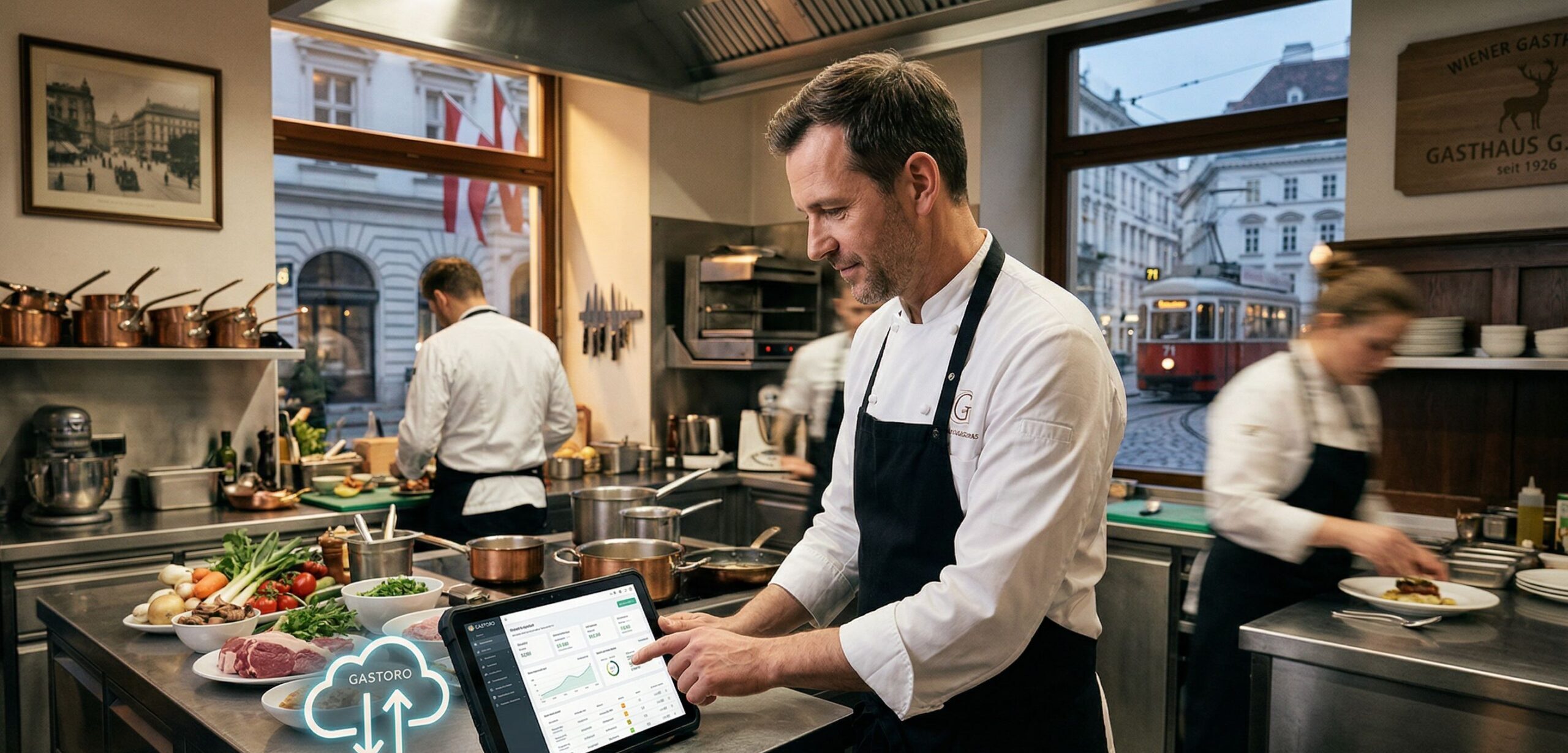
Digital platforms such as GASTORO help to make regional products visible, bundle demand and thereby strengthen the region economically. Not through ideology, but through clear benefits for everyone involved.
Table of contents
- Why regionality is not a nice-to-have today, but an economic necessity
- Digital visibility makes regional providers comparable and plannable
- Regional supply chains need clear data instead of gut feeling
- Why bundled demand strengthens the region – not the individual company
- How GASTORO efficiently connects regional suppliers and restaurateurs
- Conclusion: Regionality wins when the industry pulls together
1. why regionality is not a nice-to-have today, but an economic necessity
For many companies, “regional” is no longer a marketing term.
It is the answer to volatile import prices, long transportation routes, bottlenecks and quality risks.
At the same time, however, it has become more difficult to source regional products in a stable manner:
- Quantities fluctuate
- Rising prices
- Supply chains are thin on the ground
- Producers are under pressure
- Gastronomy cannot plan for the long term
Regionality used to be a question of philosophy.
Today, it is a question of economic viability.
And this is where it becomes clear how interdependent gastronomy and regional suppliers are:
Both are under similar pressure – both need stability.
This stability does not come from retail,
but from jointly structured demand.
2. digital visibility makes regional providers comparable and plannable
Regional shopping only works if you know who is offering something, how it was produced and under what conditions.
But many regional producers are barely visible digitally.
Restaurateurs have to phone, research and ask around – an inefficient process that often leads to people ordering from wholesalers in the end.
Digital platforms such as GASTORO solve this problem by:
- Present regional providers transparently
- Fully document products
- Making origin and certifications visible
- Map seasonal availability
- Communicate delivery times clearly
The result:
Regional products are not only found – they become comparable.
And comparability creates structure and planning security.
3. regional supply chains need clear data instead of gut feeling
Regional suppliers often have a problem that you don’t hear much about:
They don’t know when, how much and what exactly restaurateurs need.
Restaurateurs, on the other hand, do not know how available, how predictable or how stable regional products actually are.
This uncertainty harms both sides.
GASTORO creates a factual basis here:
- Real demand data
- Volume development across several farms
- seasonal patterns
- Price trends
- Immediate feedback from the industry
This data not only helps the individual company,
but the entire region:
Plannable quantities = stable prices.
Transparent demand = less risk.
Clear data = better strategic decisions.
4. why bundled demand strengthens the region – not the individual company
Regionality doesn’t work if everyone buys for themselves.
This results in small quantities, fluctuating orders and uncertain income.
For regional producers, this means
- Harvests that are harder to plan
- Irregular production
- Difficult pricing
- Higher risks
This is where the principle that will be decisive in 2026 comes into play:
Bundled demand = stronger region.
If several restaurants require similar products,
can offer regional suppliers:
- Produce more reliably
- Calculate better
- Offer more stable prices
- Guarantee greater delivery reliability
This is not community romance, but an economically logical lever.
A single company cannot create stability.
A group can.
5. how GASTORO efficiently connects regional providers and restaurateurs
GASTORO is the perfect answer to current economic conditions and customer needs.
- Many companies order similar products
- Regional suppliers want to produce more predictably
- Both sides need efficiency and clear data
GASTORO creates the connection:
For restaurateurs:
- regional products immediately visible
- comparable quality
- traceable availability
- Structured processes
For suppliers:
- Plannable quantities through aggregated demand
- Direct visibility with relevant companies
- Lower acquisition costs
- Better production planning
For the region:
- Stable cooperation
- Less dependence on imported goods
- Economic strengthening of local producers
Regionality works – but only if it is supported by a digital structure.
6 Conclusion: Regionality wins when the industry pulls together
Acting regionally is not difficult in 2026 – acting regionally stable is.
Catering businesses and regional suppliers face the same challenges.
Both feel the same cost pressure, the same uncertainties and the same demands on quality and planning reliability.
Unity makes you strong – and economically stable.
GASTORO brings exactly that together:
Digital transparency + regional offers + joint demand.
The result is a model that is not based on idealism, but on economic logic.
👉 Take advantage of regional benefits now
Buy more efficiently. More stable delivery. Acting more economically together.